More and more children and teens than ever are learning at home. The benefits are clear. Homeschooling gives the advantage of flexibility, academic superiority, efficiency, and the many opportunities that a homeschool family can take advantage of. Education is not a one-size fits all endeavor and homeschooling allows families to learn in the way that best suits them.
When you have a special needs child, no public school will ever be able to fully cater to their needs. Private schools do exist for many types of special needs, but they can be expensive and often still not fully adapted to your child’s specific situation. Therefore, you might find yourself wondering how to get your child the education that they deserve in a format that works for them. Homeschooling a special needs child is a very advantageous choice for many parents who can afford the time and resources to do so. A homeschool program will allow children with special needs to have their specific needs addressed and also avoid many obstacles that they would face in a traditional classroom. When it comes to children with learning disabilities or other severe impairments, sometimes a parent who understands their special needs is the only one who can teach the child.
Britton Manasco, writing for Reason Magazine, looks at the advantages of homeschooling, along with some interesting facets of home education. Discusses the benefits of encouraging independent thought and decentralized learning practices. The article also takes a look at the state of today's classrooms and the limitations of traditional notions of education. There is also a discussion of the use of technology in the homeschool environment and how this relates to the issue of socialization.
One of the most laughable defenses of the government-operated school system, sure to come from the keyboard of hundreds of people who participate in on-line discussion of education policy, is the notion that Nobel Prize winners and other eminent persons prove the effectiveness of our school system. Well, what do the Nobel Prize winners themselves have to say about this? This articles includes some quotations by or about Nobel Prize winners, describing their views of school.
A list of the advantages and benefits of homeschooling for children, parents, and families.
While most parents just expect and plan to send their kids to a public school, a growing number of American families are re-envisioning their education philosophy, deciding to teach their children at home. And indeed, there are several advantages to homeschooling, including more family time, using your preferred curriculum, safety, learning at their own pace, and more quality time.
Families cite common reasons for choosing to homeschool their children, such as concern about the environment at other schools, dissatisfaction with the academic instruction at other schools, and a preference for providing religious and moral instruction not provided in traditional schools. The decentralized nature of the homeschooling population limits researchers' ability to draw conclusions about the specific effect of homeschooling on various outcome measures such as academic achievement. However, evaluations of homeschooled students have reported that homeschool students perform well in that academic environment. Moreover, a survey of adults who were homeschooled suggests that home schooling leads to positive life outcomes, such as higher college attendance and enrollment.
A look at the academic advantages of choosing to homeschool your child. These benefits come from the opportunity for an excellent education, the inevitability of a dedicated teacher, and education tailored to a child's capabilities and personality, integrated and consistent education, and better teaching materials.
A slightly 'tongue in cheek' view of why someone might choose to homeschool.
When you've made the decision to homeschool, where do you start? This guide from Sonlight Curriculum explains the pros and cons of a home education lifestyle, offers free resources, and has a How to Start Homeschooling checklist to help you connect with other homeschooling families, create your homeschool vision, and choose curriculum.
Homeschooling is becoming more popular every day, with a growth rate of 7 to 15 percent per year. There are about two million children currently learning at home. Homeschooled kids do well on standardized tests, are welcome at colleges and universities, and as adults, have a reputation for being self-directed learners and reliable employees. To help other parents who are considering homeschooling, here is a new list of pros and cons.
Parents opting for homeschooling express three primary concerns about public schools: the perceived lack of academic rigor, the presence of maladjusted graduates, and an anti-religious atmosphere. Homeschool advocates assert that homeschooling effectively addresses these issues, contending that, regardless of one's educational philosophy, homeschooled students tend to excel. Proponents also argue that private schools share similarities with public schools, albeit to a lesser extent, thus facing similar criticisms. The arguments for homeschooling can be evaluated through personal case histories and scholarly analysis, with this paper focusing on the numerous studies conducted on various aspects of homeschooling.
This New York Times articles is written by a veteran homeschooler who explains that home-schooling has a significant advantage in combating the pressure schools place on children, including better use of time and high quality academics.
The homeschooling adventure can be a source of joy or a test of endurance, frequently combining both elements. How does one discern if homeschooling suits their needs? What are the positive and negative aspects of embracing homeschooling? This blog post delves into the pros and cons for kids, moms, and dads.
Explore some of the history of the homeschooling movement, why some parents choose to homeschool, the basics of homeschooling, and more. The article includes some homeschooling statistics and demographic information. Also included is a discussion of the influences of Dr. Raymond Moore and John Holt on the emerging homeschool movement.
 The Homeschool Advantage: A Child-Focused Approach to Raising Lifelong Learners
 The Homeschooling Advantage: Empowering Your Child’s Education Beyond the Classr...
 Home Advantage: Social Class and Parental Intervention in Elementary Education
 The Advantages of Home Schooling
 Science ~ Southwestern Advantage / Great American , Inc. (Southwestern Advantage...
 The Self-Propelled Advantage: The Parent's Guide to Raising Independent, Mo...
 Homeschooling. Homeschooling Guide. Homeschooling Comprehensive Guide Includes: ...
 The Four-Hour School Day: How You and Your Kids Can Thrive in the Homeschool Lif...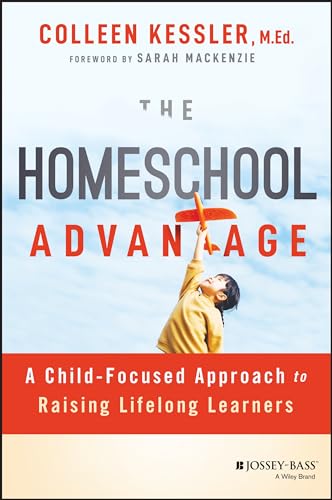






 The Homeschool Advantage: Crafting Compelling Academic Records
