Are you panicking at 4:00 pm because you didn't realize it was so late and no dinner is planned? Let Menus 4 Moms help plan your dinner! Every week, Menus 4 Moms posts a dinner menu including recipes and grocery list for Monday through Friday, freeing your planning time. Menus 4 Moms is a weekly email with a link to free menus and recipes for dinner and is based on the Busy Cooks Pyramid.
Homeschooling is a time-honored and widespread practice. It often presents, however, a conflict between the constitutional right of parents to direct the education of their children and the State’s right to impose regulations in the interest of ensuring an educated citizenry. The U.S. Supreme Court has made it clear that any regulation impacting this constitutional right must be “reasonable.” Courts have therefore generally resolved homeschooling cases by examining whether State regulation of homeschooling places an unreasonable burden on the rights of parents. The courts, however, have altogether failed to address another, more fundamental question: whether the State regulation, in fact, advances the State interest. A regulation that fails this criterion cannot be “reasonable.” Using a recent California appellate court case that initially upheld a regulation prohibiting parents from homeschooling their children unless they first obtained a state teaching credential, we show how recent social science research should impact the analysis. Instead of assuming away the issue of whether the regulation advances the State interest, we show that empirical research will allow courts to be able to answer this threshold question.1
 Human Body Activity Book for Kids: Hands-On Fun for Grades K-3
 Scholastic Flash Cards: Sight Words
 Home Learning Year by Year, Revised and Updated: How to Design a Creative and Co...
 The Homeschool Planner: Beautiful and Undated with Monthly Tabs | To Do List, Go...
 School Zone Travel the Great States Workbook: 64 Pages, 3rd Grade, Geography, Ma...
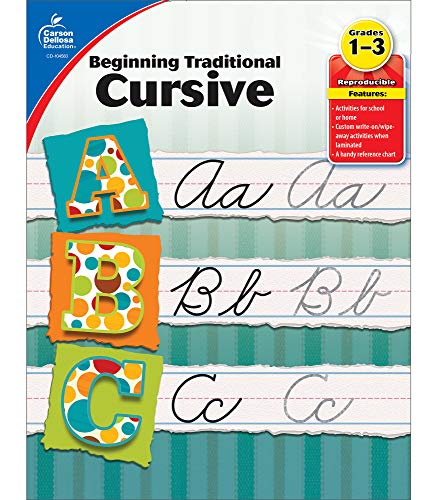
 Carson Dellosa Grades 1-3 Beginning Traditional Cursive Handwriting Workbook, Wr...
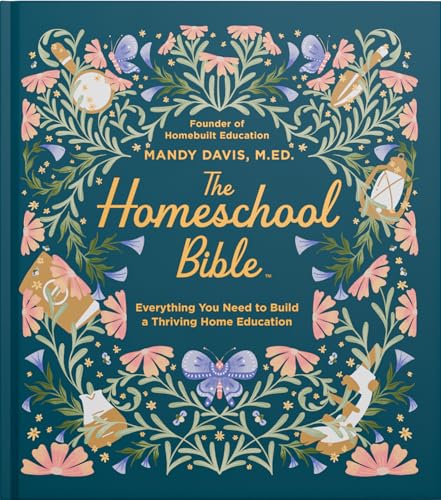
 The Homeschool Bible: A Practical Guide to Homeschool Curriculum, Lesson Plannin...
 100 Timed Tests for Addition and Subtraction: Math Book for Kids Ages 4 to 7 | P...



 Becoming Homeschoolers: Give Your Kids a Great Education, a Strong Family, and a...
 Ready•Set•Learn: Cursive Writing Practice, Grades 2–3 from Teacher Created Resou...
 Evan-Moor How to Teach Art to Children, Grades 1-6, Learn and Use Elements of Ar...
 The Christopherus Waldorf Curriculum Overview For Homeschoolers